Stunted Gravity — Demo Out Now!
Fact Sheet
| Developer | Matthew Heinzen, independent developer |
| Game | Stunted Gravity |
| Genre | Arcade stunt racing and vehicle combat |
| Platforms | Windows, Linux |
| Controls | Gamepad recommended, keyboard supported |
| Distribution | Steam |
| Demo | Out Now! |
| Full Release | September 23, 2026 |
| Price | $11.99 with discount at launch |
| Supported Languages | English, Spanish (Latin American), Simplified Chinese |
| Website | stuntedgravity.com |
| Steam | store.steampowered.com/app/4103290 |
| Press Contact | press@stuntedgravity.com |
About the Developer
Matthew Heinzen is a solo developer based in Minneapolis, Minnesota. He holds a B.S. and M.S. in Computer Science from the University of Minnesota, with a focus on graphics and visualization.
He began his game development career at Big John Games, where he was concept creator and lead designer and developer for the futuristic vehicle combat titles Thorium Wars (DSiWare) and Thorium Wars: Attack of the Skyfighter (3DS Download). Big John's most successful title during that period was Cube Creator 3D, a Minecraft-style building game that launched on the 3DS eShop before Minecraft itself was available on the platform.
After the birth of his second child, Heinzen spent nearly a decade in financial technology before returning to game development. Stunted Gravity is his first solo commercial project, developed entirely with open-source tools: Godot 4, Blender, MaterialMaker, LMMS, and Audacity. The artwork and music are both original, composed and created by Heinzen himself.
About the Game
Stunted Gravity is an arcade hovercraft stunt-racing and vehicle combat game set in a neon-dystopian future. Players compete in the Stunted Gravity Circuit: a series of deadly arenas rigged with traps, hazards, and enemy robots, staged as gladiatorial entertainment for a cyberpunk society that treats vehicle carnage as sport.
The game is built around a single core skill set: stunt driving. But where most games of this type offer a handful of modes, Stunted Gravity pushes that core into over a dozen distinct event types, from time trials and stunt rings to paint-tagging territory control, Tron-style shockline trails, gem scavenging, and survival gauntlets, along with a set of mashup events that layer mechanics for more complex challenges. Every event, regardless of type, rewards the same fundamental skills: clean lines, precise stunts, and improvisation under pressure.
Arenas rotate gravity in every direction. Courses built with ramps, half-pipes, and hazards play completely differently depending on which way down is, and many arenas are reused across multiple events, asking players to approach the same space with different objectives and different lines.
The Circuit is structured as a planetary progression, from the remote training grounds of Pluto through to Earth. Each planet hosts a circuit of events that can be tackled in flexible order, with completion unlocking the next circuit. Events are scored with a five-tier medal system: Lead, Bronze, Silver, Gold, and Titanium, and are designed for replayability: passing an event is accessible; a clean run feels earned.
A freeform Practice mode, a large open skate park with no time limits or threats, lets players develop their skills outside the competitive structure.
The closest reference points are F-Zero (vehicles and setting), Tony Hawk's Pro Skater (stunt-centric arena design), and Super Mario Galaxy (dynamic, omnidirectional gravity). The combination isn't quite like anything currently available.
Key Features
Arenas redirect, flip, and flow gravity across every axis. Every course is a puzzle solvable at full speed.
Time Trials, Tagger, Shockline, Scavenger, Stunt Rings, Survival, Hunter, and mashup events that combine mechanics. Each rewards the same core stunt-driving skills from a different angle.
Most arenas host two or three distinct events. Familiar spaces reveal new depth when the goal changes, echoing the design philosophy of Super Mario 64.
Every event is graded Lead through Titanium, modeled on Platinum Games' scoring philosophy. Passing is accessible; perfection is its own reward.
The Stunted Gravity Circuit frames competition as cyberpunk spectacle: deadly arenas, robotic adversaries, and a crowd that wants a show.
Developed in Godot 4 with Blender, MaterialMaker, LMMS, and Audacity. Original artwork and music by the developer.
Trailer
Screenshots
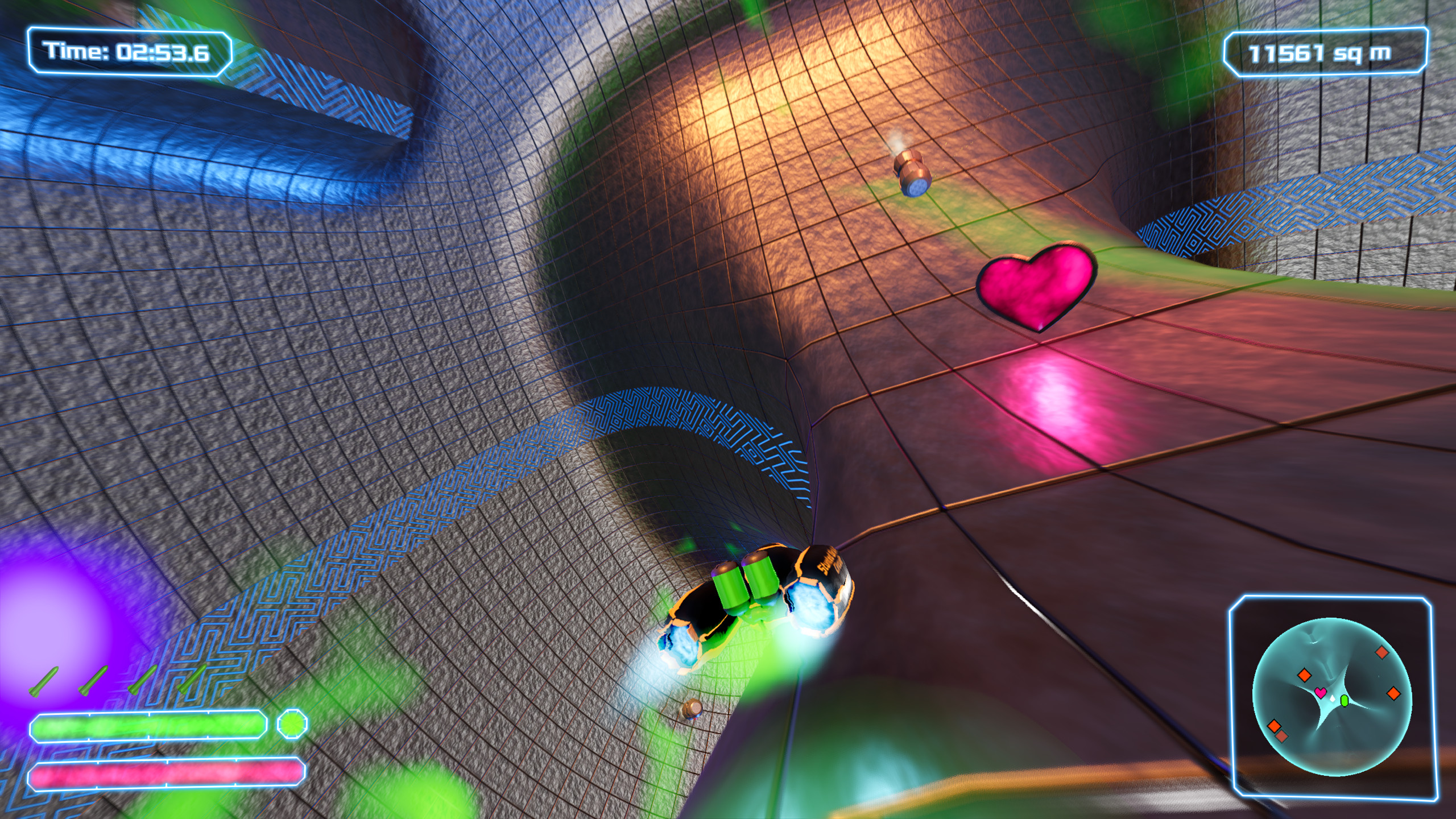
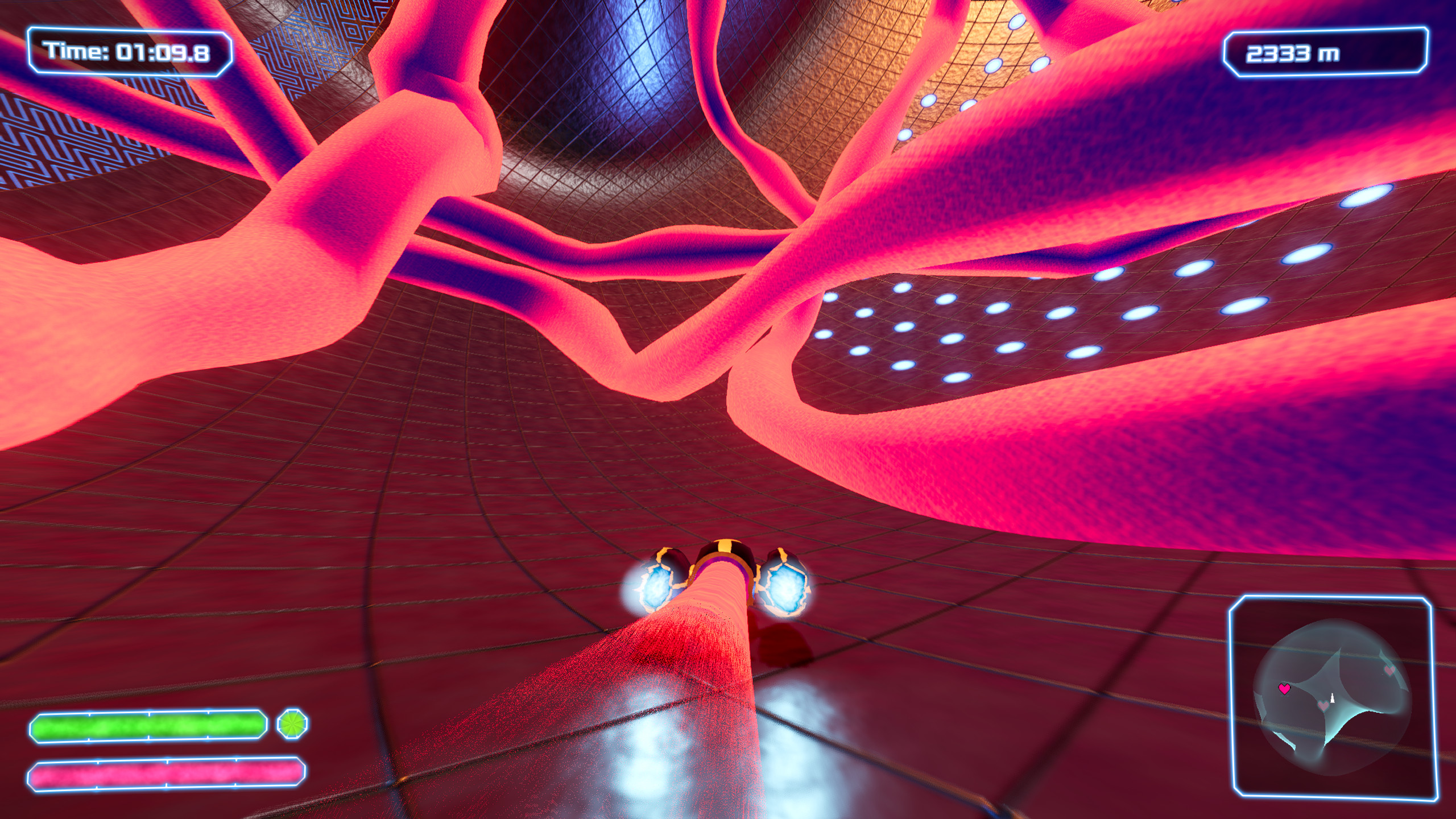
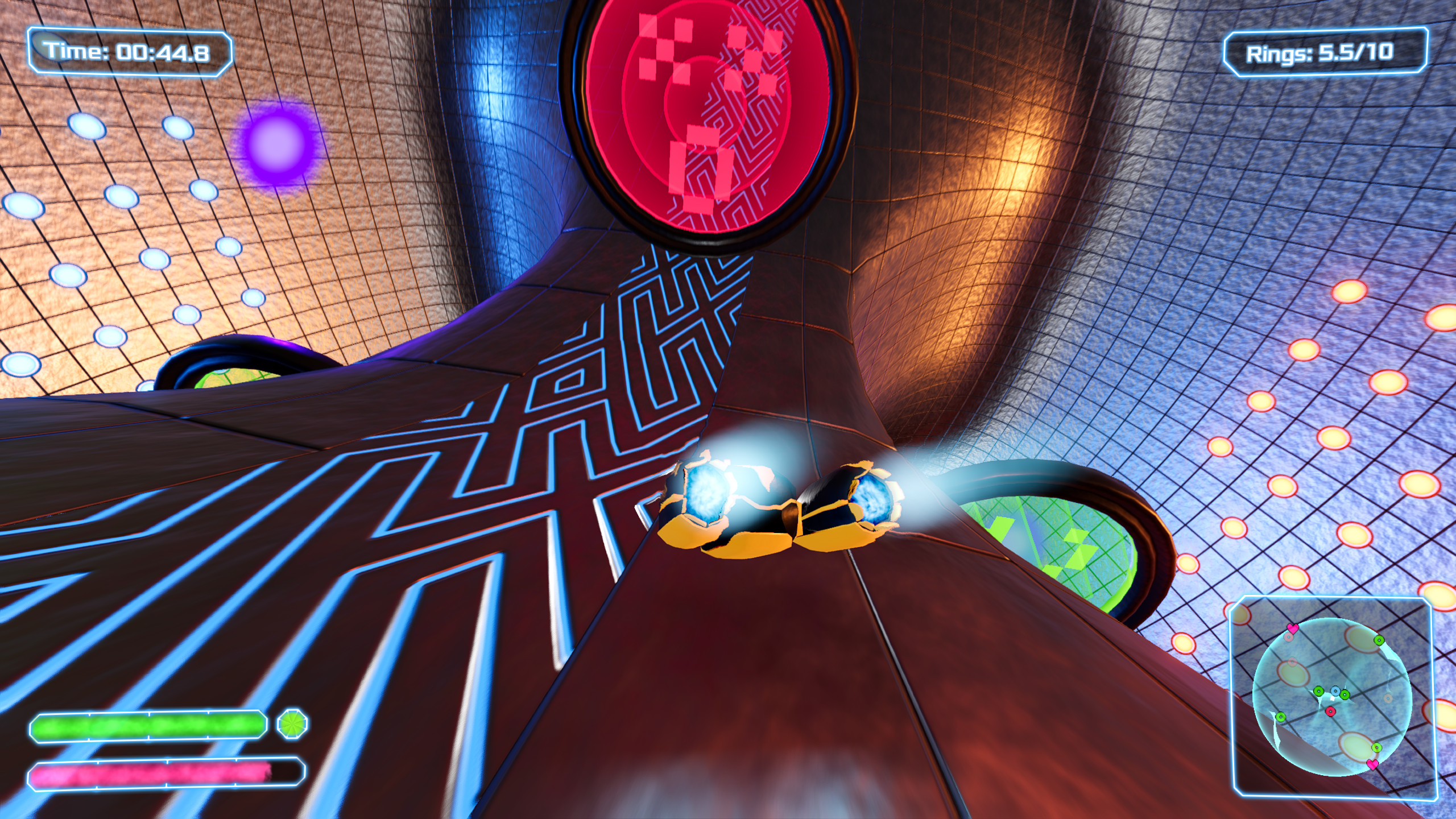
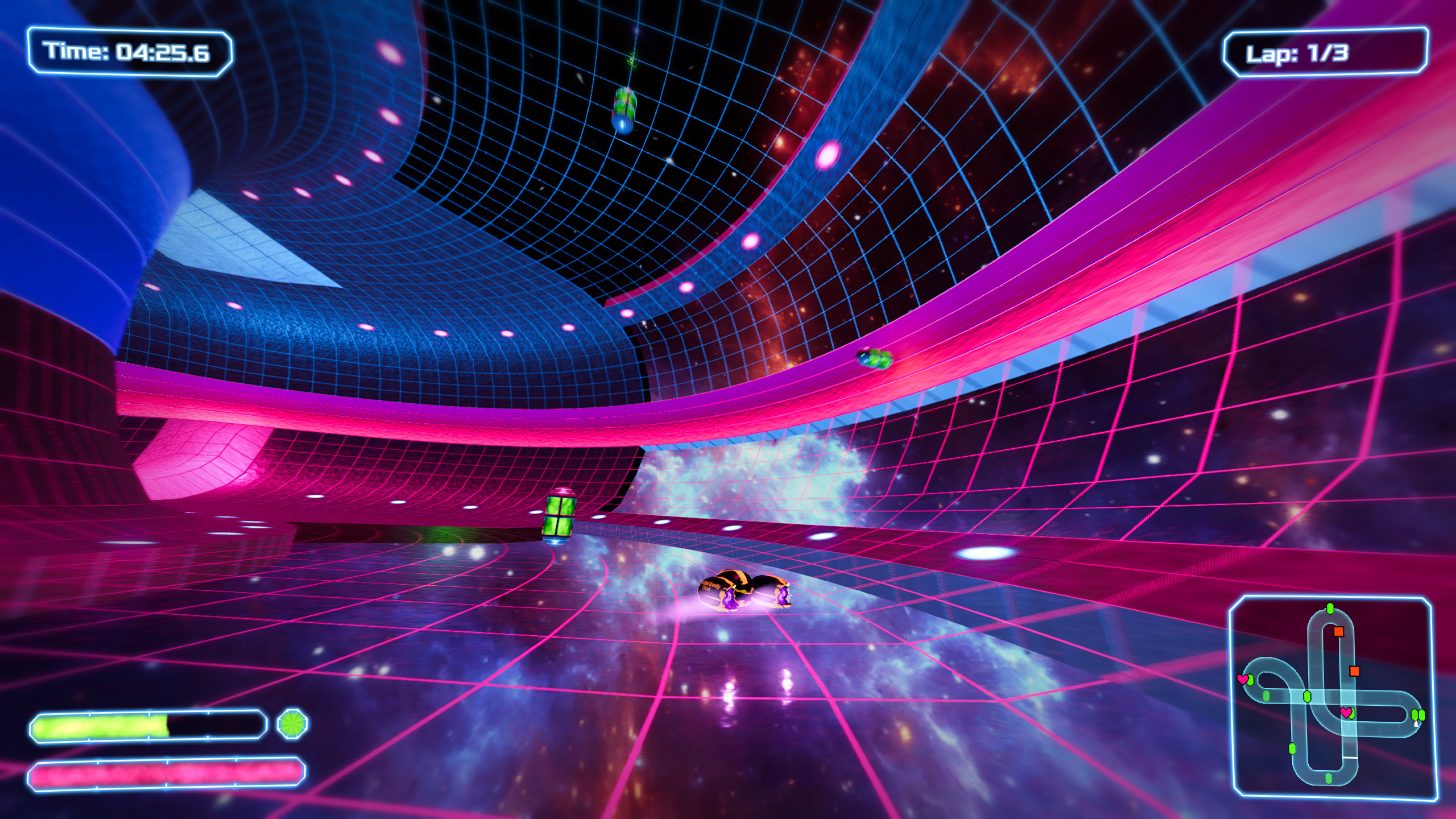
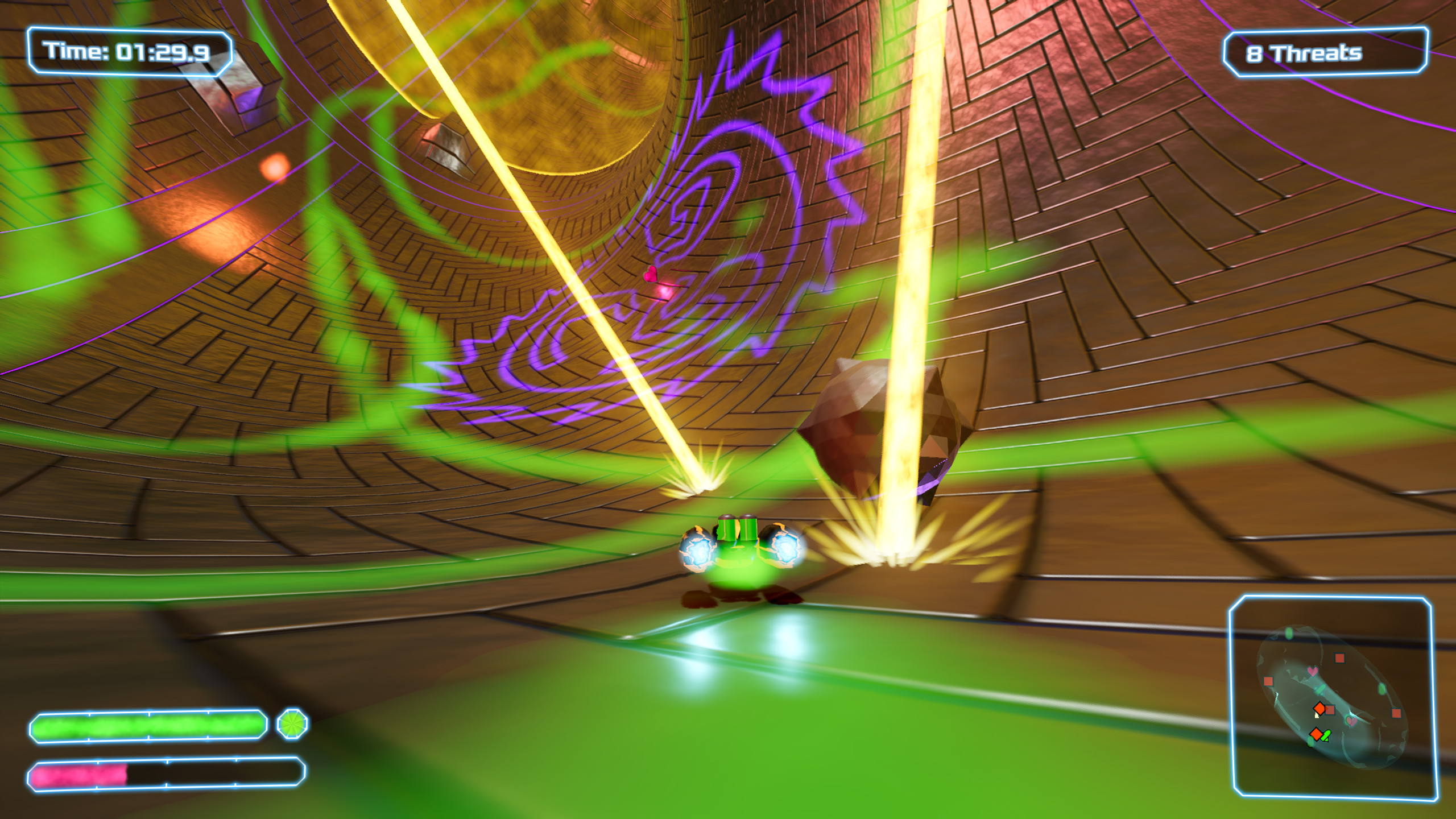
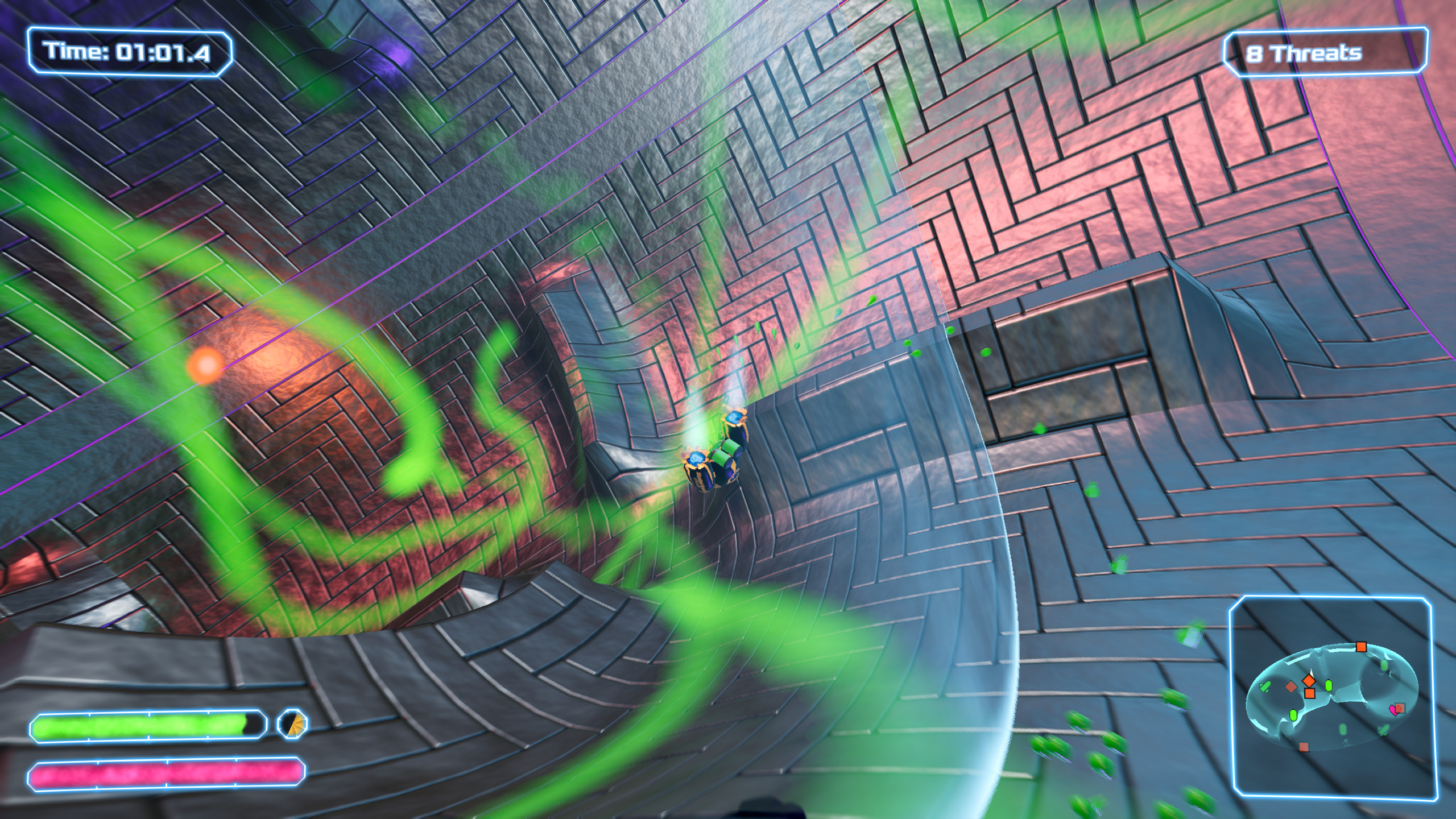
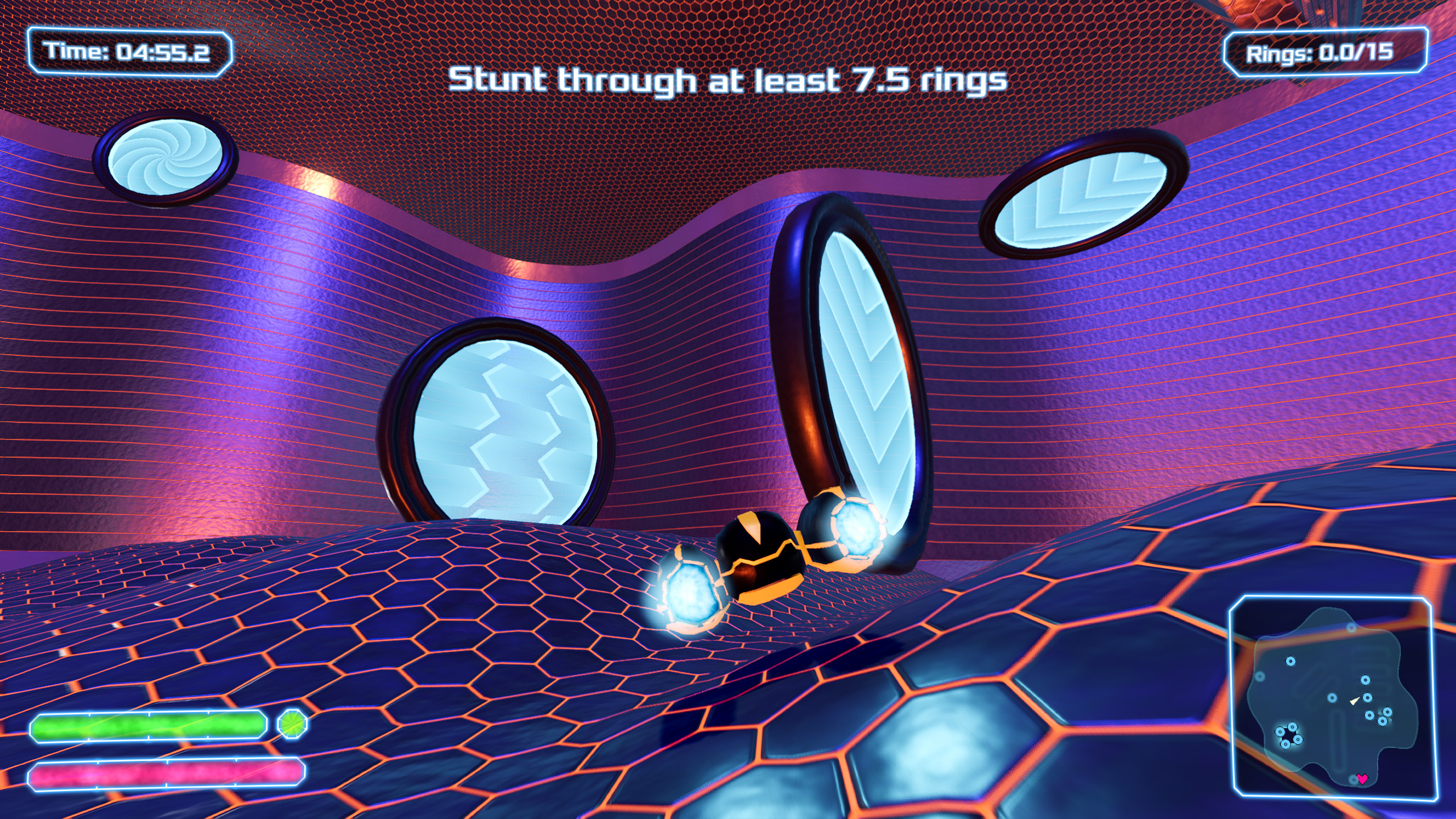
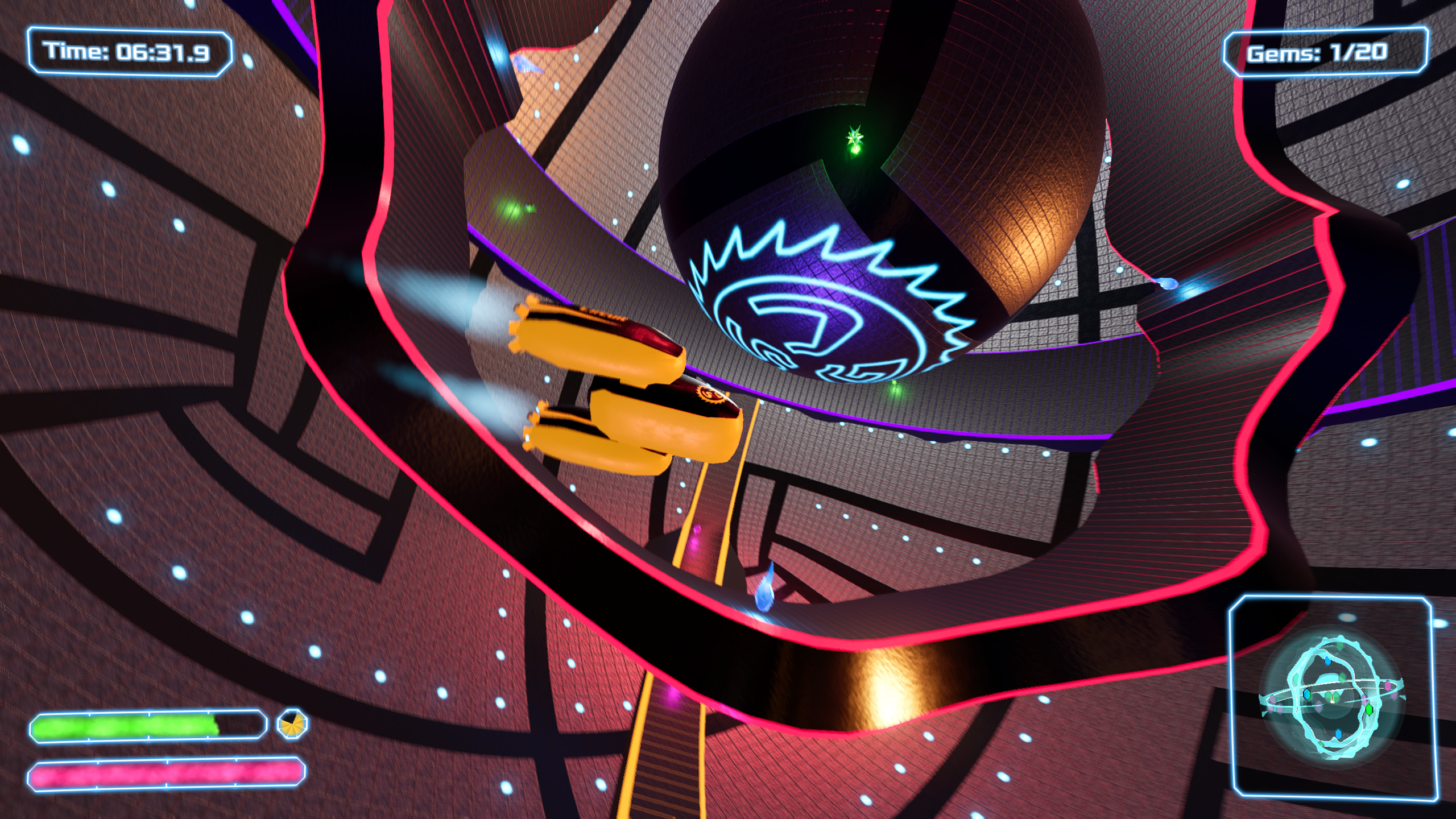
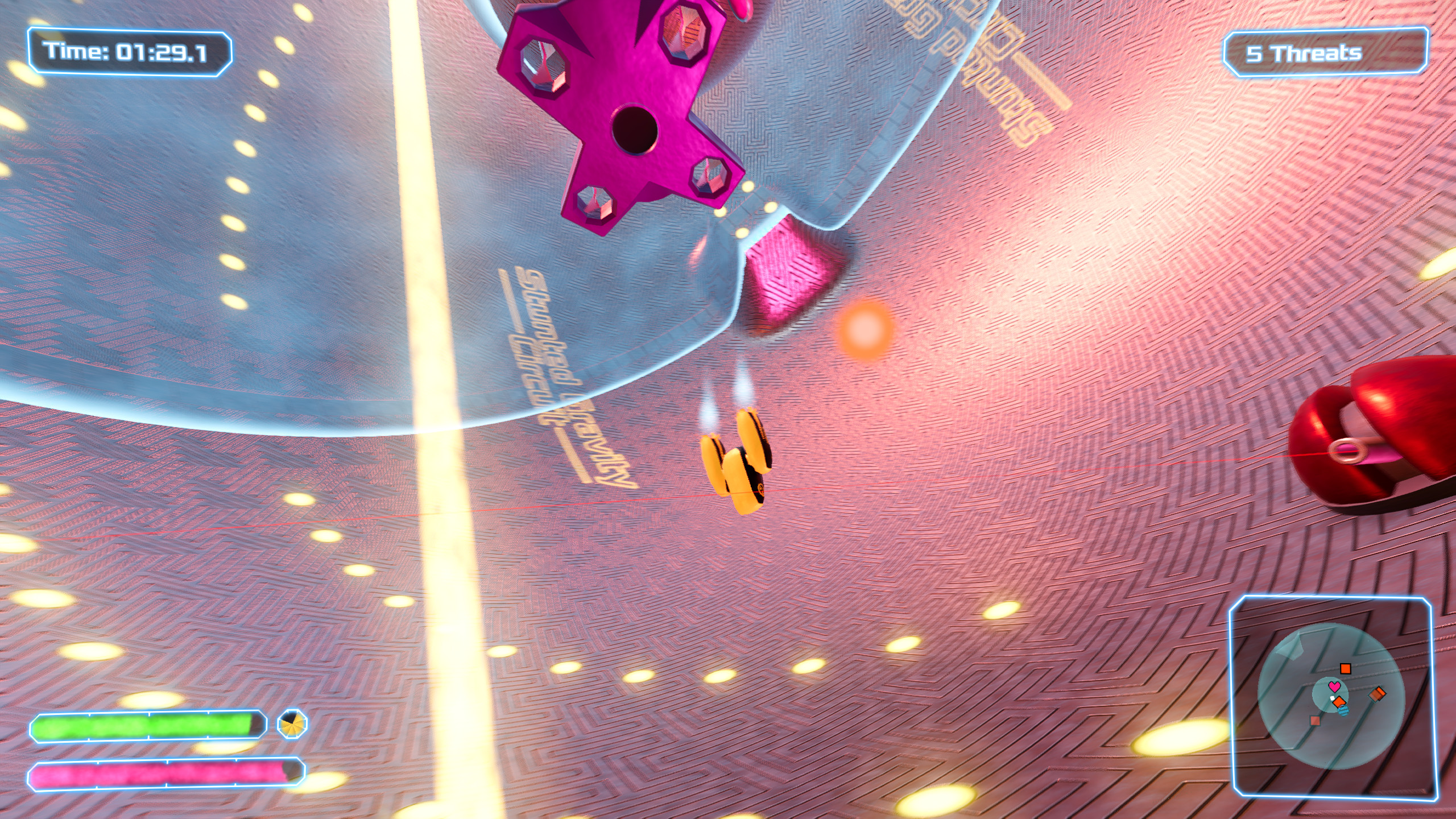

Click any image for full resolution. All screenshots available in the press kit download below.
Downloads
Development Notes
The design philosophy behind Stunted Gravity is rooted in Heinzen's conviction that a game needs a reason to exist: some experience it offers that isn't already covered. The event variety is a direct answer to that: stunt-driving games tend toward either pure racing or pure trick systems. Stunted Gravity builds a broad range of objectives on top of a single, learnable skill floor, so players who invest in getting good at the driving get paid back across every mode.
The gladiatorial setting of drivers competing in rigged, lethal arenas for an audience wasn't just aesthetic. It gave Heinzen a design license to fill courses with contrived traps and hazards that would feel arbitrary in a realistic racing context, and to frame combat and scoring within a world that makes those things feel native rather than bolted on.
Heinzen grew up with Star Wars and Transformers, and the futuristic vehicle aesthetic of Stunted Gravity traces directly back to that, and to his earlier work on the Thorium Wars games.